
Only NIIF has stayed the course as a viable infrastructure financing institution.
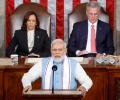
Here's the full text of Prime Minister Narendra Modi's address to a joint session of the United States Congress, delivered on Thursday.

India's equity markets are on a roller-coaster ride, after delivering spectacular returns for two consecutive years - in 2020 and 2021. The benchmark National Stock Exchange's (NSE's) Nifty50 is down 1.5 per cent in the first nine months of the current calendar year 2022 (CY22) as foreign portfolio investors sold Indian stocks due to rising bond yields in the US and across global markets, including India. The sell-off in the Indian equity markets has, however, not been broad-based and largely limited to sectors facing earnings headwinds from rising interest rates, lower commodity and energy prices, and likely economic recession in advanced economies.

Even as the Group of Seven (G7) price cap on Russian crude oil enters into force as of December 5, India has been assured it will continue to receive the existing deep discounts on Russian oil, for the time being, informed officials. "We have been assured by our Russian partners of uninterrupted crude supplies at the existing rates for the time being. "There were a lot of reports of changes in (India's) buying patterns after the global price cap took hold.

'Don't take being laid off personally or as a reflection of your performance if you have always been a good performer,' says HR Expert Khevna Shah.
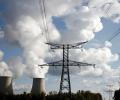
The nation will have nine nuclear reactors by 2024 and a new nuclear project, the first in northern India, will come up 150 kms away from Delhi in Gorakhpur of Haryana, the government informed the Rajya Sabha.

In a first of its kind move, the Indian Railways Catering and Tourism Corporation (IRCTC), the ticket booking arm of the Indian Railways, is looking to monetise its bank of passenger data while conducting business with private and government companies. IRCTC has a large bank of data related to every online railway ticket ever generated as it is the country's only railway ticketing platform, an IRCTC official told Business Standard. The public sector undertaking, which has sought the services of a consultant to assist with the monetisation process, plans to raise Rs 1,000 crore through this exercise.

Inflation trajectory, domestically as also globally, is what will shape the economy, and therefore the market, over the next couple of quarters.'

US-based Tesla is working through a lot of challenges with the government to launch its products in India, the electric car major's founder and CEO Elon Musk said on Thursday. Responding to a tweet on the company's plans to launch its products in India, Musk tweeted: "Still working through a lot of challenges with the government." Last year, Tesla had sought a reduction in import duties on electric vehicles (EVs) in India.

Start-ups Zomato, PB Fintech, One97 Communications, and FSN E-Commerce Ventures have entered the large-cap category after the latest reclassification exercise by the Association of Mutual funds in India (Amfi). This comes despite stocks such as PB Fintech (Policybazaar) and One 97 Communication (Paytm) trading below their issue price. Others such as Mindtree, SRF, IRCTC, Tata Power, JSW Energy have been moved from mid-cap to large-cap category.

So far the government has been silent on the charges being levelled, even after the stock price rout. Perhaps it is hoping for the share price to settle so that the matter goes away, predicts Aakar Patel.

The Reserve Bank of India (RBI) on Wednesday announced to increase the policy repo rate by 50 basis points to 4.9 per cent, the second hike in five weeks aimed at quelling the inflation. The MPC vote was unanimous and has decided to keep stance withdrawal from accommodative, RBI Governor Shaktikanta Das said in a press conference on Wednesday. The decision was taken during a three-day meeting of the RBI's Monetary Policy Committee (MPC) to review the interest rates in the country. The MPC voted unanimously to increase the policy repo rate by 50 bps to 4.90 per cent," Das said.

'Such big falls are quite frequent these days, so do not try to time this market.' 'Use big dips to accumulate quality stocks.'

There is money to buy the central public sector enterprises, but buyers will need a firm assurance that the disvestment programme will keep environment issues front and centre of their corporate plans.
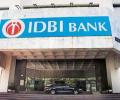
The department of investment and public asset management is racing against time to launch the LIC IPO, which could become the largest-ever listing on the Indian bourses. This would lead to some delay in the strategic divestment of IDBI Bank.

Changing tracks helps. But, not taking the beaten path isn't always helpful. This is the story of two of India's biggest privatisations - Air India and Bharat Petroleum (BPCL). Nearly two decades after the last privatisation, a landmark divestment concluded this year when the loss-making national carrier Air India was sold to the Tatas.
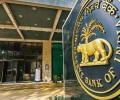
The Reserve Bank of India on Friday raised the benchmark lending rate by 50 basis points to 5.40 per cent to tame inflation.
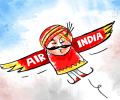
With the new owner shelling out Rs 18,000 crore for the buyout of 'Maharaja' this would be the highest ever amount garnered through privatisation or even the cumulative sum garnered through strategic sale in 1999-00 to 2003-04. The government had garnered roughly over Rs 5,000 crore during that five-year period by privatising 10 CPSEs.
After a hiatus of nearly two decades, the government's programme to privatise state-owned firms restarted with the handing over of debt-laden national carrier Air India to the Tata Group. With the new owner shelling out Rs 18,000 crore for the buyout of the 'Maharaja', this would be the highest-ever amount garnered through privatisation, and is even more than the cumulative sum mopped up through strategic sales from 1999-00 to 2003-04. The government had in October last year inked the share purchase agreement with the Tata Group for sale of national carrier Air India for Rs 18,000 crore. Tatas would pay Rs 2,700 crore cash and take over Rs 15,300 crore of the airline's debt.
'We have relatively strong growth and a healthy corporate earnings cycle as positives, but a worrisome current account deficit and high inflation as challenges.'

Raising slogans, members of the BRS, Left parties and some members of the Congress walked out of Lok Sabha in protest as the prime minister was speaking.
The government is set to divest its shareholdings in defence PSUs, Garden Reach Shipbuilders & Engineers Ltd and Mishra Dhatu Nigam Ltd (MIDHANI). It will also divest its shareholding in BEML Limited, said Shripad Naik. Minister of State for Defence, on Monday. The government has invited preliminary bids to sell its 26 per cent stake in BEML along with transfer of management control.

The government on Monday budgeted Rs 1.75 lakh crore from stake sale in public sector companies and financial institutions, including 2 PSU banks and one general insurance company, in the next fiscal year beginning April 1. The amount is lower than the record Rs 2.10 lakh crore which was budgeted to be raised from CPSE disinvestment in the current fiscal year. However, the COVID-19 pandemic impacted the government's CPSE stake sale programme, and the target has been lowered to Rs 32,000 crore in the Revised Estimates.

Stating that open markets mean more opportunities, Modi said during the last six years the government has made many efforts to make the Indian economy more open and reform oriented.
IT, FMCG and manufacturing sectors are less attractive to foreign portfolio investors

Finance Minister Nirmala Sitharaman on Tuesday said the interest of all employees of state-owned banks which are likely to be privatised will be protected, even as bank unions observed a two-day strike against the government's privatisation decision. Replying to a query during a press conference, she clarified that public sector presence will continue in the banking space. "...we have announced public enterprise policy based on which we have identified those four areas in which we said government presence, public sector presence will be there, and bare minimum presence is what we have said, in that financial institutions are also there. "Meaning, even in financial sector we will still have the presence of public sector enterprise...not all of them are going to be privatised," she said.

He is survived by two sons, Rajiv Bajaj and Sanjiv Bajaj, and a daughter Sunaina Kejriwal.

Before the start of each of the four races at the Jawaharlal Nehru Stadium, Tendulkar did 10 push-ups as part of the #KeepMoving Push-up Challenge and urged the runners to join him in the exercise.

The FPI holding in India's top 100 companies, which are part of the Nifty 100 index, declined to 24.23 per cent on average at the end of March this year, from a high of 27.5 per cent at the end of March 2021. This is the lowest FPI holdings in India's top listed companies in at least three years. A general sell-off by FPIs has weighed on stock prices and the benchmark S&P BSE Sensex is down 8.5 per cent, from its 52-week high made in October 2021. Most analysts expect FPI flows to remain weak in FY23 as well, given rising bond yields in the US and an expected earnings slowdown in India due to high inflation and commodity prices.
The combined profit before tax of 748 companies, which have declared their results for Q1FY21, is down 46 per cent YoY. Their net sales went down by a quarter as the Covid-19 lockdown led to a sharp fall in economic activity.
In the third of the series, Suren Kochchar offers six pointers to help women achieve financial goals. An International Women's Day Special.

Bengaluru-headquartered IT services major Wipro Limited on Thursday announced that it has signed an agreement to acquire Capco, a global management and technology consultancy to the banking and financial services industry, for USD 1.45 billion.

The early bird results for the January-March 2022 quarter (Q4FY22) hint at a slowdown in corporate sector growth in the upcoming quarters. The combined net sales of the 81 early bird companies in the Business Standard sample were up 15.1 per cent year-on-year in Q4FY22; this was less than the 15.9 per cent YoY jump reported in Q3FY22. The slowdown could be much stronger for the domestic market-focused companies, including those in the banking, finance, and insurance (BFSI) space.

Since jobs will remain scarce for the foreseeable future, an unemployment allowance should be the next big social-security initiative, suggests T N Ninan.

Ola Electric's technology team is working hard to iron out the technical kinks that marred the electric vehicle company's hyped online sale of its electric scooters (e-scooters) - the S1 and the S1 Pro - on Wednesday, said company sources. The SoftBank-backed firm is facing technical difficulties in making the website live for the purchase of its e-scooters. According to company sources, the website couldn't go live as there were integration issues.

Ajit Mishra, vice president, research, Religare Broking, answers your queries.

IT company Wipro posted a 17 per cent jump in consolidated net profit to Rs 2,930.6 crore for the quarter ended on September 30, 2021. The company had posted a net profit of Rs 2,484.4 crore in the same period a year ago. Wipro said that it has surpassed $10 billion (around Rs 75,300 crore) annualised revenue run rate.

Despite headwinds, it remains "structurally bullish" on India and expects the Sensex to scale up to the 70,000-mark by December 2022; 80,000 level in a bull-case scenario and hover around the 50,000-mark as a bear-case, the brokerage house said in a report.

Smokers and tobacco consumers will have to shell out more for their indulgence as Finance Minister Arun Jaitley continued with the crackdown on cigarettes and tobacco products by increasing taxes in the Budget for 2017-18.

Business failures rise when growth declines. When Indian growth slowed in the last decade, defaults increased. This is the normal working of the market economy, points out Ajay Shah.
 © 2026 Rediff.com - Advertise with us - Disclaimer - Privacy Policy - Sitemap - Feedback - About us - Terms of use - Grievances